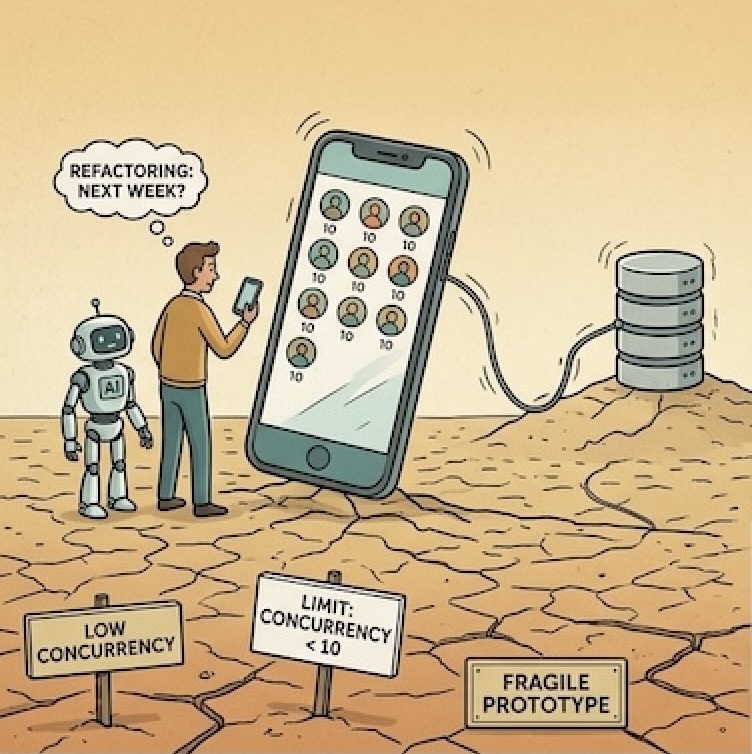
Beyond the Vibe: Why Your Business Needs a System, Not Just an App
Choosing between short-term prototype hype and continuous business resilience
The era of "vibe coding" has arrived, empowering laymen to design and launch software simply by describing their ideas to an AI without writing a single line of code. As a creative outlet, a standalone tool, or a quick prototype to demo a concept, this approach works remarkably well. It allows non-technical creators to visualize ideas faster than ever before.
However, a fundamental gap opens up when transitioning from a solo project to real-world operations. What happens when a large group of concurrent users starts accessing the app at the exact same time? Will the generated code hold up under intense operational load, or will concurrency issues cause bottlenecks and crashes?
Integration presents an even bigger hurdle. Can a vibe-coded app seamlessly connect to external business databases and enterprise software? Conversely, can established corporate systems reliably and securely pull live data from the app?
The true test arrives when market conditions inevitably shift, forcing a fundamental overhaul of the app's underlying database structure. When schema relationships, historical records, and data logic must be restructured, can an AI or a layperson relying on simple prompts safely execute complex refactoring without corrupting data or breaking existing features?
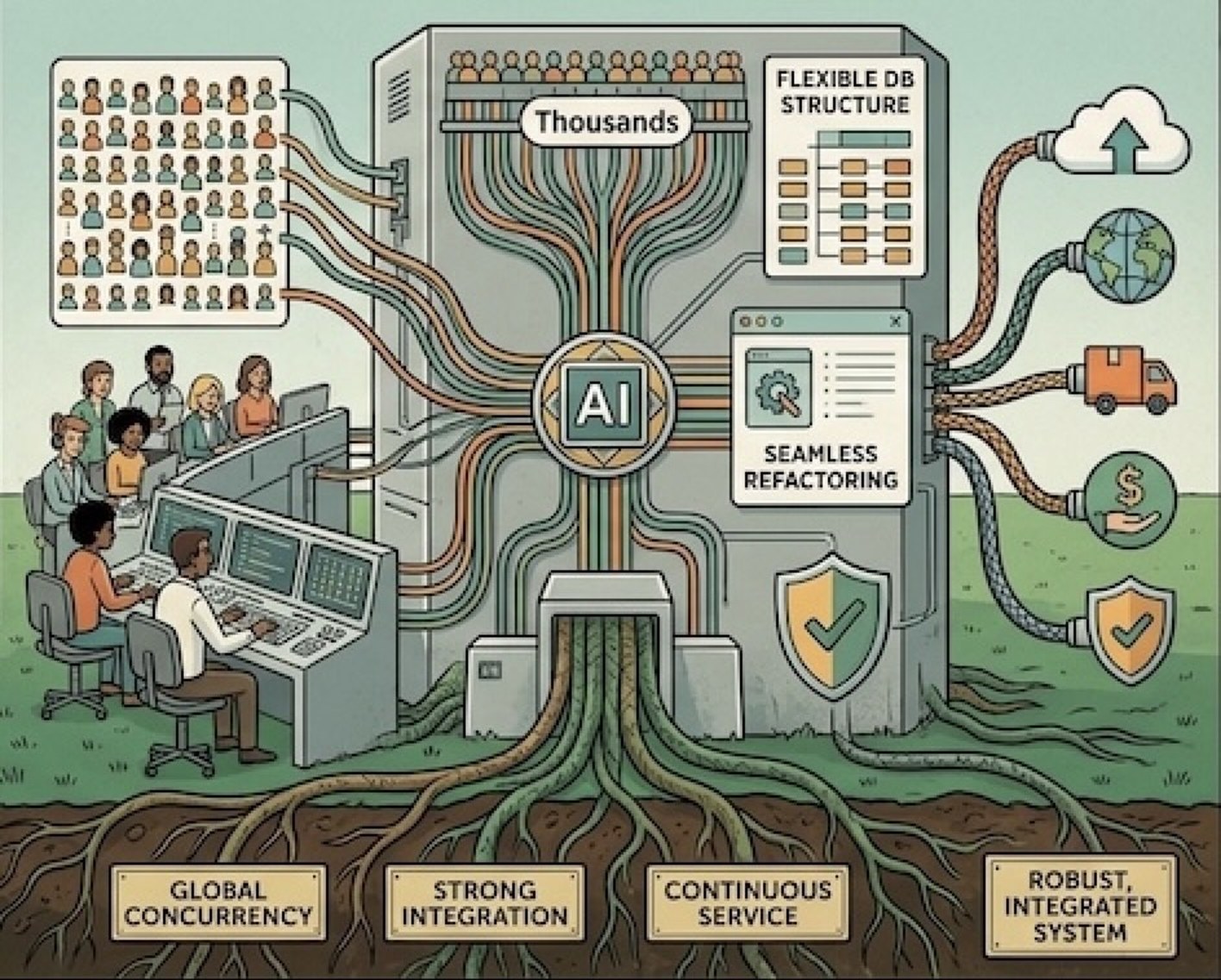 This contrast highlights the vital difference between a quick application and a true software system. A system is a continuous, living service designed to support a complex web of users or organizations facing an ever-changing business environment. Because the market never stands still, a system must be constantly reviewed, pruned of unnecessary clutter, and upgraded with new capabilities to remain effective over time.
In practice, apps built purely through vibe coding are usually viable in only two scenarios. First, when created for the coder's personal enjoyment—a fun experiment to demonstrate how AI can bridge the technical gap for someone with zero programming experience. Second, for unproven business ventures testing initial market feasibility. In those early stages, if the venture fails to prove itself, the business simply shuts down, and long-term software maintainability is no longer an issue.
When building for lasting business success, every organization reaches a critical crossroads: Do you want to build a quick app that acts merely as an appealing shell, or a resilient system built with genuine substance and continuous functionality?
Comment and share your thoughts!